
Portfolio
Resetting a family stone
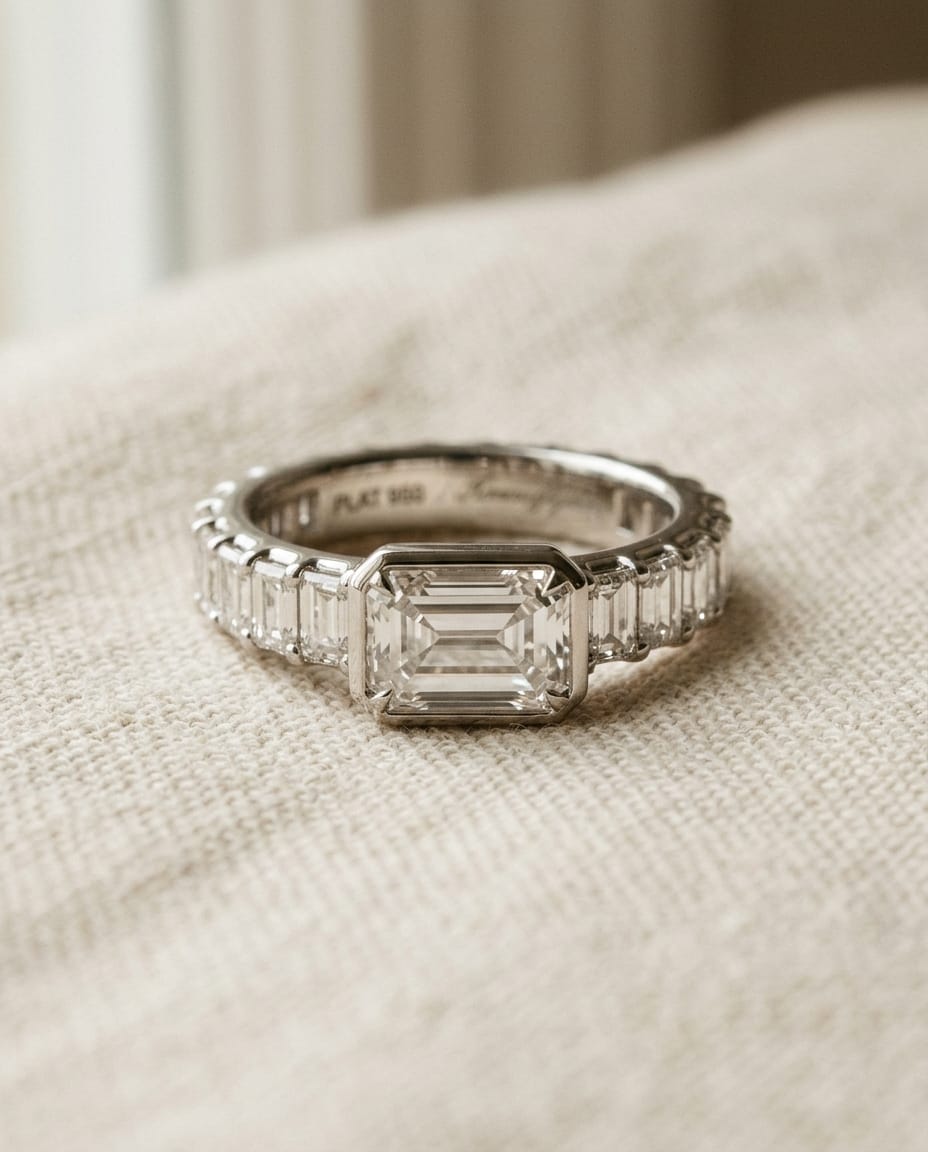
The stone came to us in an old leather box, set into a yellow-gold cocktail ring that had belonged to the wearer’s grandmother. A 1.80 ct emerald-cut diamond, G colour, VS2 clarity — beautifully proportioned, unworn for the better part of two decades, and asking to be brought back into circulation.
The brief was a tenth anniversary gift. The wearer didn’t want her grandmother’s ring; she wanted what was inside it.
Unset, reset, recut?
The first decision was whether to touch the stone itself. Old emerald cuts often have shallower pavilions than current taste, and a careful recut can sometimes lift the brightness by a noticeable margin. We took the stone to one of our cutters for an opinion. The answer was: leave it alone. The proportions were strong, the inclusions were peripheral, and recutting would have cost the wearer 8–12% of the carat weight for an improvement only a trained eye would notice.
We unset the diamond and held it for a fortnight while the new setting was designed.
The new ring
East-west orientation — the long axis of the emerald cut runs across the finger rather than along it. It’s a contemporary treatment that suits the stone’s rectangular geometry and reads as deliberately modern against the heirloom diamond inside it.
The band is platinum, 2.4mm at the shoulders, with a low-profile bezel that wraps the stone just below the table. No claws, no side-stones. The wearer’s engagement ring is yellow gold; the new band is intentionally a different metal so the two read as two pieces, not one inherited set.
What the box held
The old setting was returned to the wearer in a small jeweller’s pouch. She didn’t want it melted; she wanted the option to do something with it later. We agreed.
If you have a stone in a drawer that hasn’t been worn in years, the same process applies. Get in touch and bring it in — there’s almost always something to be done with it.